Saplet is a household app for brains that lose the thread. It shows you today and nothing else, keeps a private journal nobody can read, and makes sure the reward actually arrives while it still means something.
Free during the beta. Testers keep it free for life.
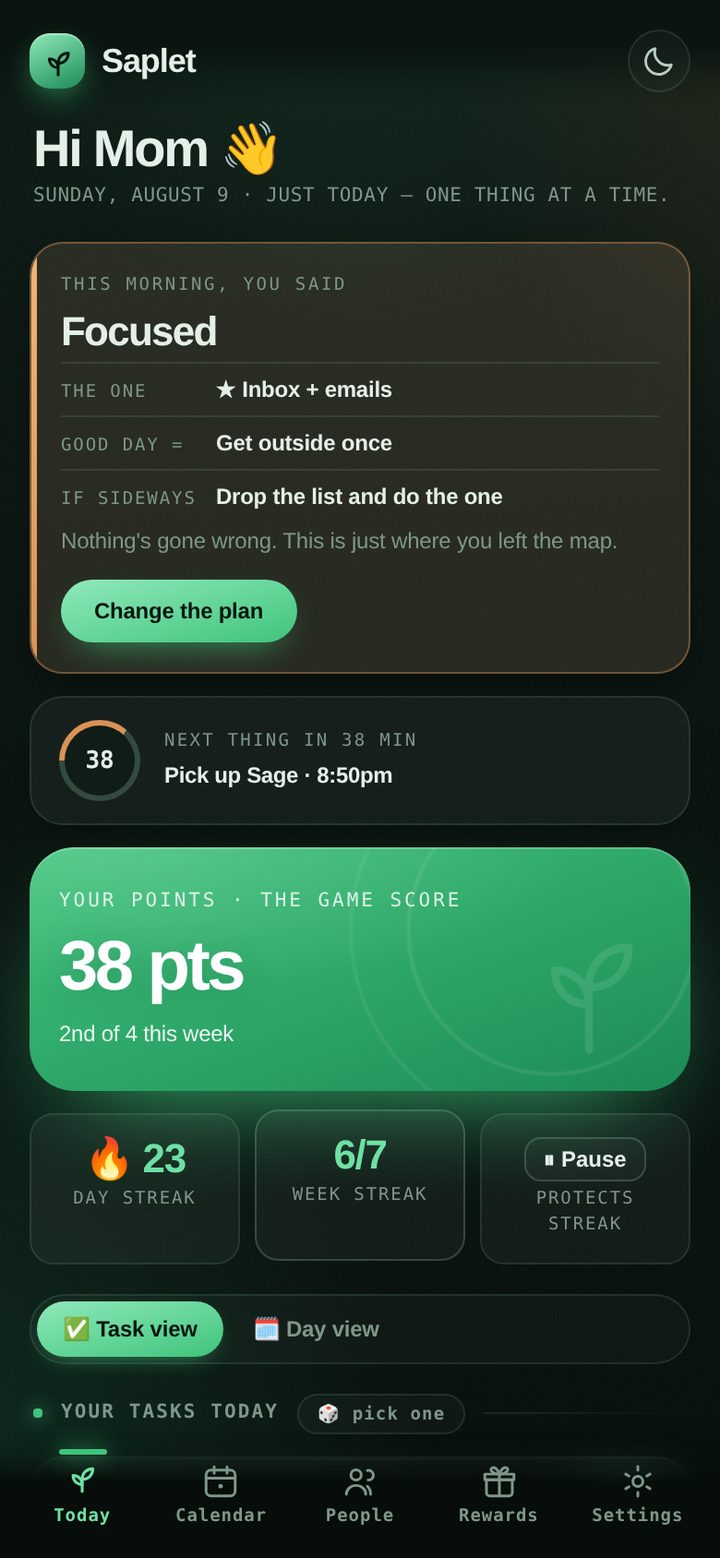
A running countdown to the next thing, not just a timer for this thing.
Break anything into steps. Half done is worth half, not nothing.
A pause protects your streak. Showing up is the whole ask.
Do a thing. Someone confirms it. The reward and the score move. That's it, whether you're eleven and saving for Robux or thirty-eight and trying to remember to book the dentist.
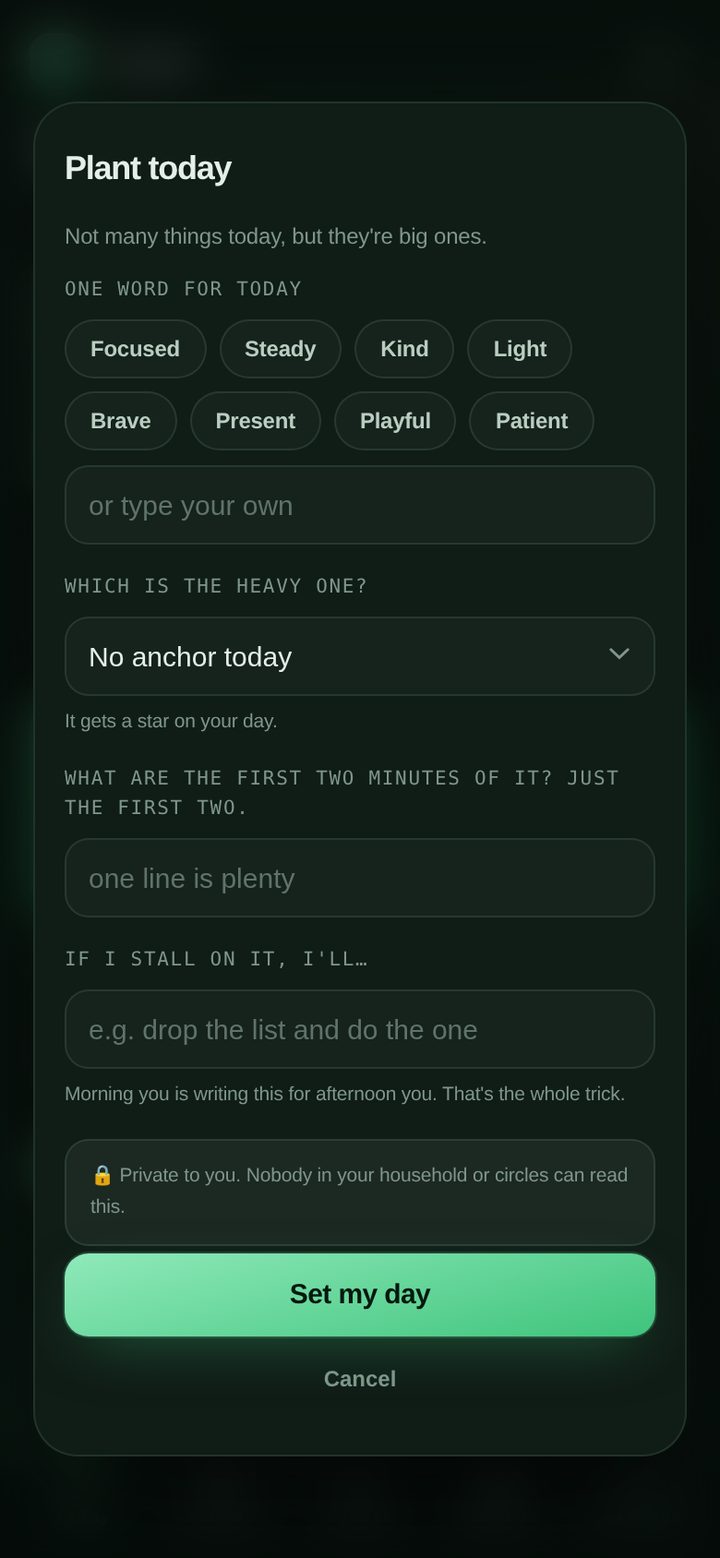
Thirty seconds each morning: a word for today, the one thing that matters, and what you'll do when it goes sideways. When the day drifts, that card comes back on its own.
Today shows only your own day. Timers, steps, a two-minute option for the task you're avoiding, and a button that just picks one for you when choosing is the obstacle.
Send it to the household or a friend. They weigh in on what it was worth. If nobody gets to it in time, it clears on its own, because a kid shouldn't wait on an adult's inbox.

Plan the day, or just say how it's going. The prompts change with the shape of the day, so a heavy Tuesday asks for the first two minutes and an empty Saturday asks what you'd love it to hold. It never comments on whether you're doing well.
Entries are private, permanently. There is no screen in Saplet where a parent can read a child's journal, on purpose. They can see a small sprout meaning "checked in today", and that's all.
If an entry reads like a genuinely hard day, Saplet asks the person who wrote it whether they'd like to tell someone, and offers a short message they choose. Nothing they wrote is ever sent, and they can pick someone outside the family.
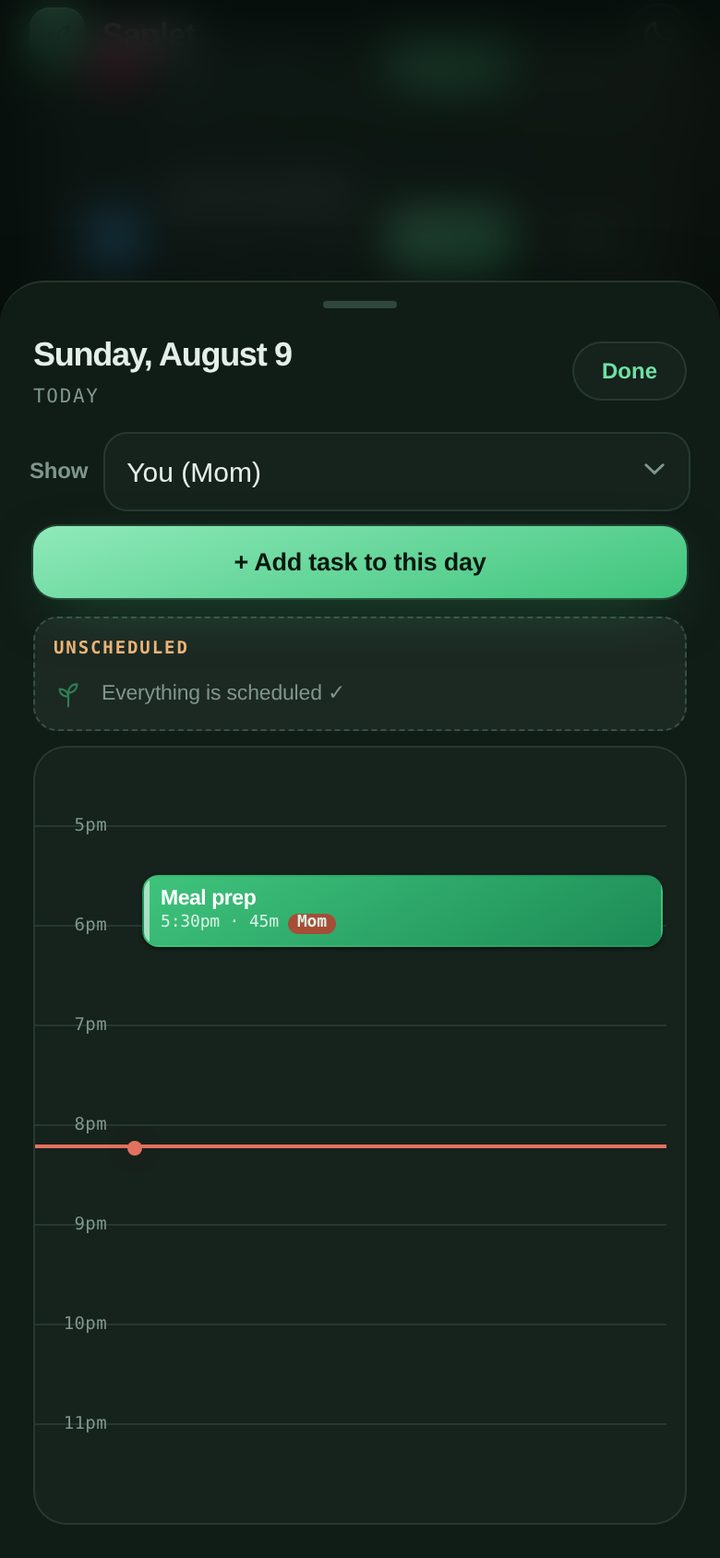
Tap a day, drag things around, drag an edge to change how long it takes. Assign anything to anyone, or to everyone, or to all the kids at once.
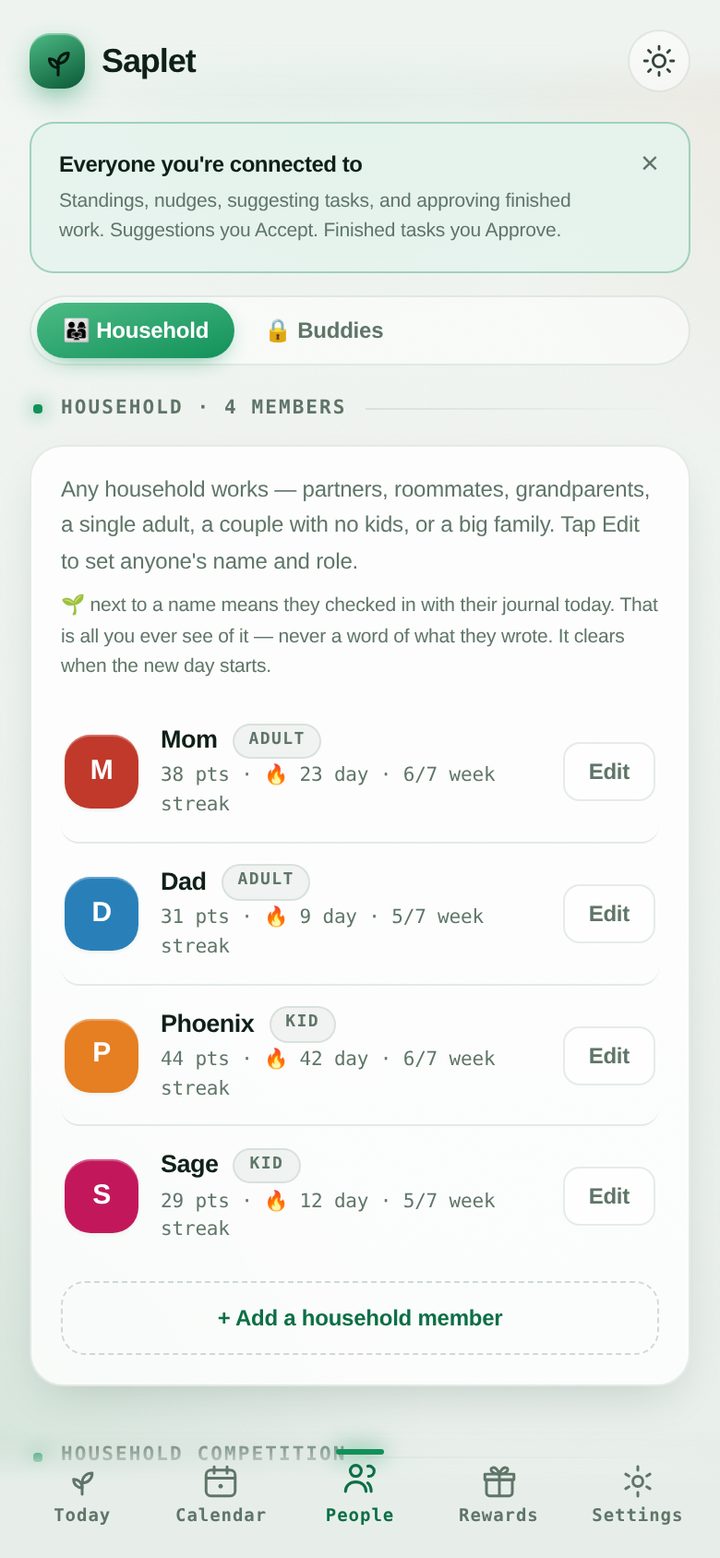
Send a task to another adult and they get asked first, because you can't drop work on a grown-up without their say. Kids can suggest tasks to anyone in the house and the person decides, which is how a nine-year-old gets a say in how home runs.


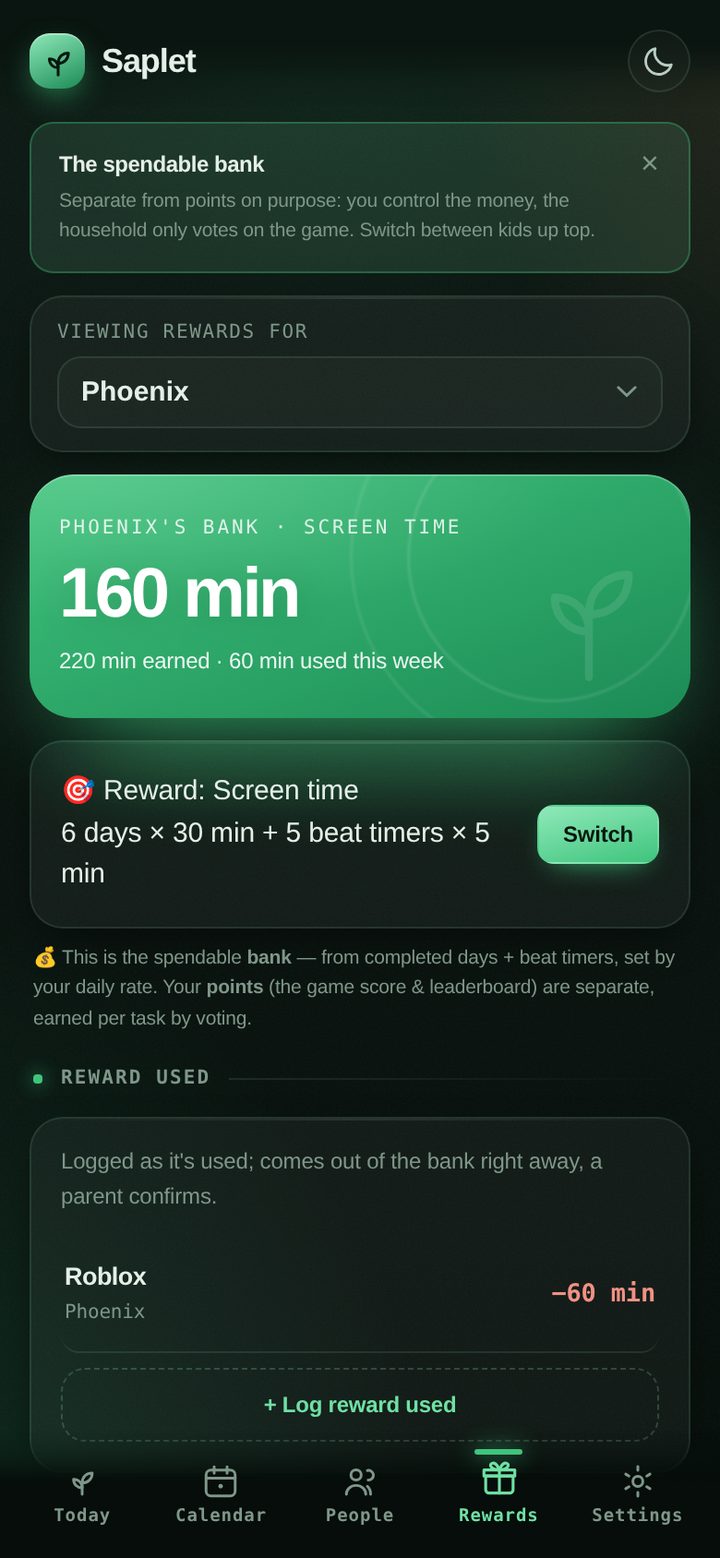
The bank is the spendable reward and you set it. Screen time, allowance, Robux, or something you invent. Switch a child's reward and their whole week re-values into it automatically.
The points are the game score, voted on by the household. That's where a kid gets a real say, and it's safe to give them one, because points aren't money. A vote can never inflate the reward.
Every child is set up separately: their own reward, their own rate, their own scoring. One kid can be on equal points, where every task is worth the same, so there's no incentive to only do the big ones.
Not as a slogan. As an architecture. The safest data is the data that isn't there any more, so most of it deletes itself on a timer.
Photos are shrunk on your own phone before they send, with the location data stripped out. You can download everything you own at any time, and deleting your household really deletes it. The full policy says all of this in longer words.
Same app, pointed at adults. Buddy circles are small groups you make yourself, each with their own standings and their own stakes, so your partner and the Friday crew aren't in the same race.
Send a finished task to a circle and they vote on what it was worth. Body-double a fifteen-minute session with someone. It's the same accountability loop, just without anyone's chore chart.
Setting up on your own? Say so at the start and the family side stays hidden until you want it.

A handful of households using it every day for three weeks, telling me what's broken. If that sounds like you, put your name in. If it fills up first, the launch list gets you in the door early with a discount.